gbmuseum
I run the Game Boy Museum (gameboymuseum.com), a private, non-commercial archive of the original Game Boy (DMG-01) and everything around it.
What first drew me to the grey brick (DMG-01) was never really the newest games but the strange things people added to the little machine: barcode scanners, fish finders, infrared links, cameras and printers. Someone, somewhere, kept finding new ways to expand what the Game Boy could do.
The collection now holds more than 360 objects and is still growing. Wherever possible I collect the collection items complete in box (CiB), with the original packaging, inserts and accessories, because these are usually the first things to get lost, and with them much of the story.
My own tinkering began with simple things, like giving a Game Boy a backlight or a modern IPS screen, and eventually went all the way to building a Zeroboy, a complete modern handheld inside an original 1989 shell. I even soldered its HDMI cable together by hand, strand by strand, a small detail I am still quietly proud of.
Those mods already give the old hardware real new powers: playing in the dark, a sharper picture, better sound, and with the Zeroboy even running whole other platforms on a Game Boy. But every one of them works by changing the machine itself. What really caught me was a different idea: how alive the Game Boy still is in software, a whole scene of people giving the original, unmodified console brand new abilities purely in code.
That scene is what pushed me to try it myself, not by upgrading the Game Boy from the outside but by teaching it new tricks from within. The cartridges here are the result:
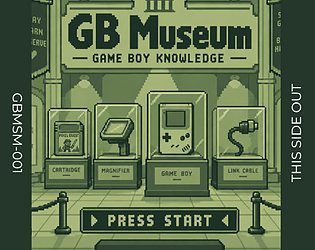
- The GB Museum on a Cart - the whole museum on a single Game Boy
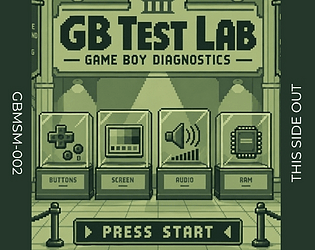
- GB Test Lab - checks whether a DMG-01 still works properly
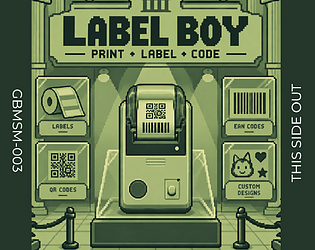
- GB Label Boy - turns the Game Boy Printer into a label maker
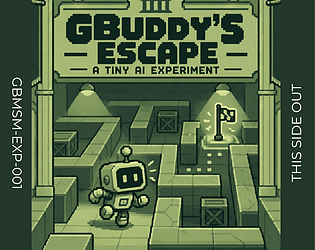
- GBuddy’s Escape - a little machine learning experiment to show what the DMG-01 is still capable of
Each one asks the question the collection started with, what else could this thing do?, and tries to answer it in code.
That is also why they are free. These carts are not a product but a way of keeping the little grey machine switched on, and of passing the question on. If one of them sends someone off to build their own, so much the better.